
Short summary
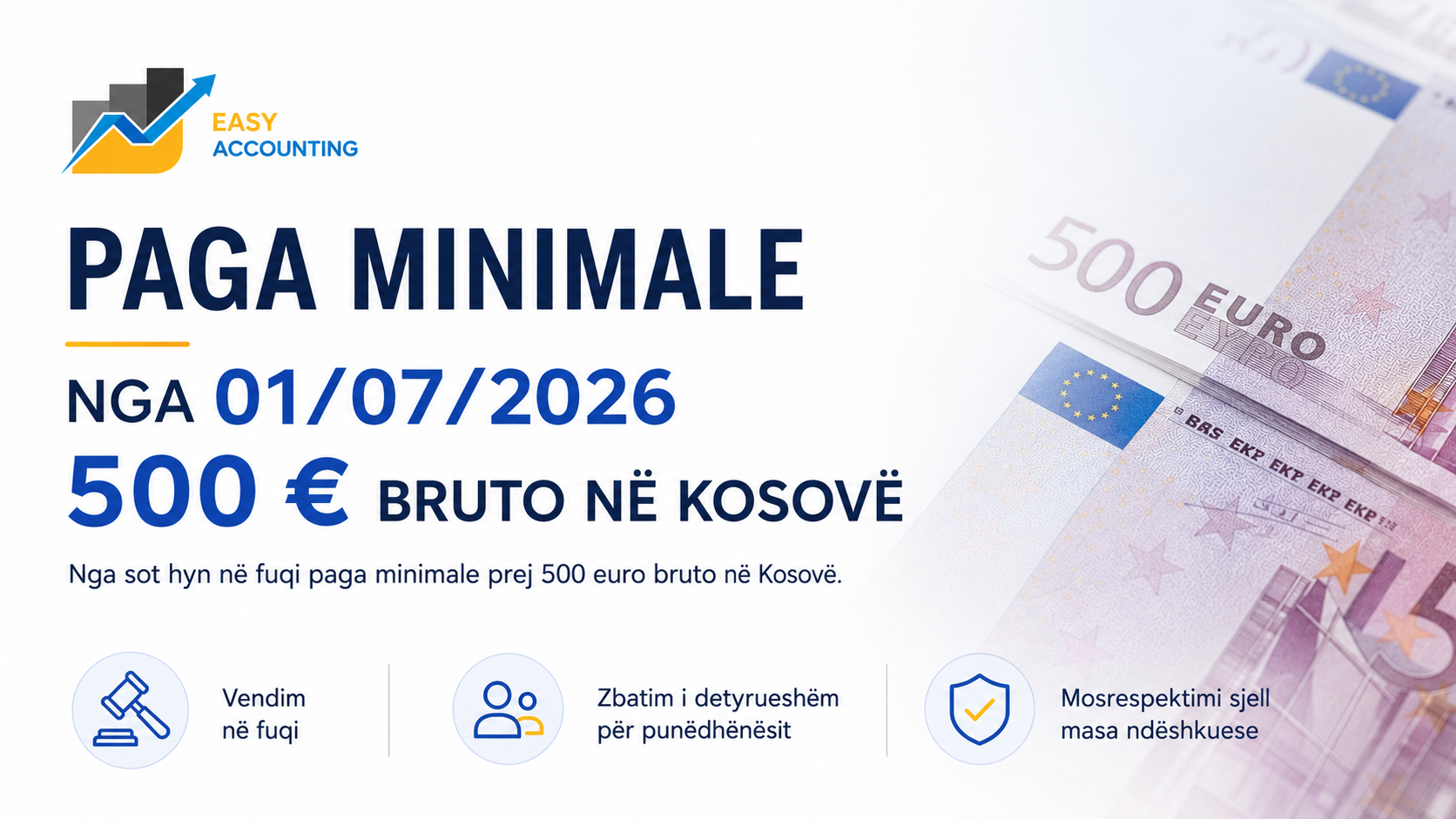
From 01.07.2026, the minimum wage in Kosovo becomes €500.00 gross per month for full-time work, or €3.00 per regular working hour. This change is based on Decision No. 10/273 of the Government of the Republic of Kosovo, dated 31.10.2025, on setting the minimum wage for 2026. Before this phase, from 01.01.2026 to 30.06.2026, the minimum wage is set at €425.00 gross per month, or €2.50 per regular working hour.
What has changed?
From 01.07.2026, the gross minimum wage for full-time work increases to €500.00 per month, or €3.00 per regular working hour. From 01.01.2026 to 30.06.2026, the minimum wage is set at €425.00 gross per month, or €2.50 per regular working hour.
Who is affected?
This change particularly affects businesses with employees whose gross salaries are below €500.00, including sectors such as retail, hospitality, construction, personal services, production, cleaning and maintenance, as well as businesses with a larger operational workforce.
What should the business do?
The business should review the gross salaries of active employees, employment contracts and existing annexes, the monthly payroll list, pension contributions, wage tax, ATK declarations, total monthly staff cost and part-time employees, where pay should be calculated proportionally.
- Review gross salaries
- Update contracts or annexes
- Review the monthly employee cost
- Prepare payroll according to the change
Practical example
If an employee has been declared with a gross wage below €500, payroll should be reviewed before the first declaration after 1 July 2026. In addition to gross salary, the net wage, employee contribution, employer contribution, wage tax and the impact on the monthly business cost should also be checked.
What should employers do?
Every business should review its payroll list and ensure that from July 2026, no full-time employee is declared with a gross wage below €500.00.
How is the €500 gross minimum wage calculated?
The minimum wage is gross, not net. This means the employee pension contribution and wage tax are deducted from the gross wage, resulting in the net amount transferred to the employee.
This calculation is indicative and may vary depending on the employer status, pension contributions, primary or secondary employment and the rules that apply to the specific case.
What should be updated?
Businesses are advised to prepare contract annexes or updated contracts on time, an internal decision for the salary change, a new gross payroll list, monthly and annual cost calculations, a review of ATK declarations, bank payment evidence and documentation for part-time cases.
Why should action be taken on time?
Failure to comply with the minimum wage may create issues in tax declarations, payroll records, employment contracts, institutional inspections, employee relations and business financial planning. For this reason, the change should not be treated only as a salary increase, but as a full update of employment documentation and payroll records.
Frequently Asked Questions
Should the employment contract be changed?
If the existing contract has a gross wage below the new minimum level or includes terms that need to be aligned, the business should review the contract or prepare an annex as appropriate.
Does the minimum wage affect contributions and tax?
Yes. When gross salary changes, the bases for pension contributions, wage tax and the employer total cost also change.
Should payroll be reviewed before declaration?
Yes. A pre-declaration review helps ensure salary, contributions, tax and employee data are aligned with the change.
Do you need us to review your case?
Send us the documents or your question. Our team will guide you on the steps, deadlines and documents that should be reviewed.
Note: This notice is informational and does not replace professional accounting, tax or legal advice. For specific cases, such as part-time employees, special contracts, secondary employment, foreign nationals, bonuses or mid-month changes, individual verification is recommended before declaration.